
Common Structural Issues
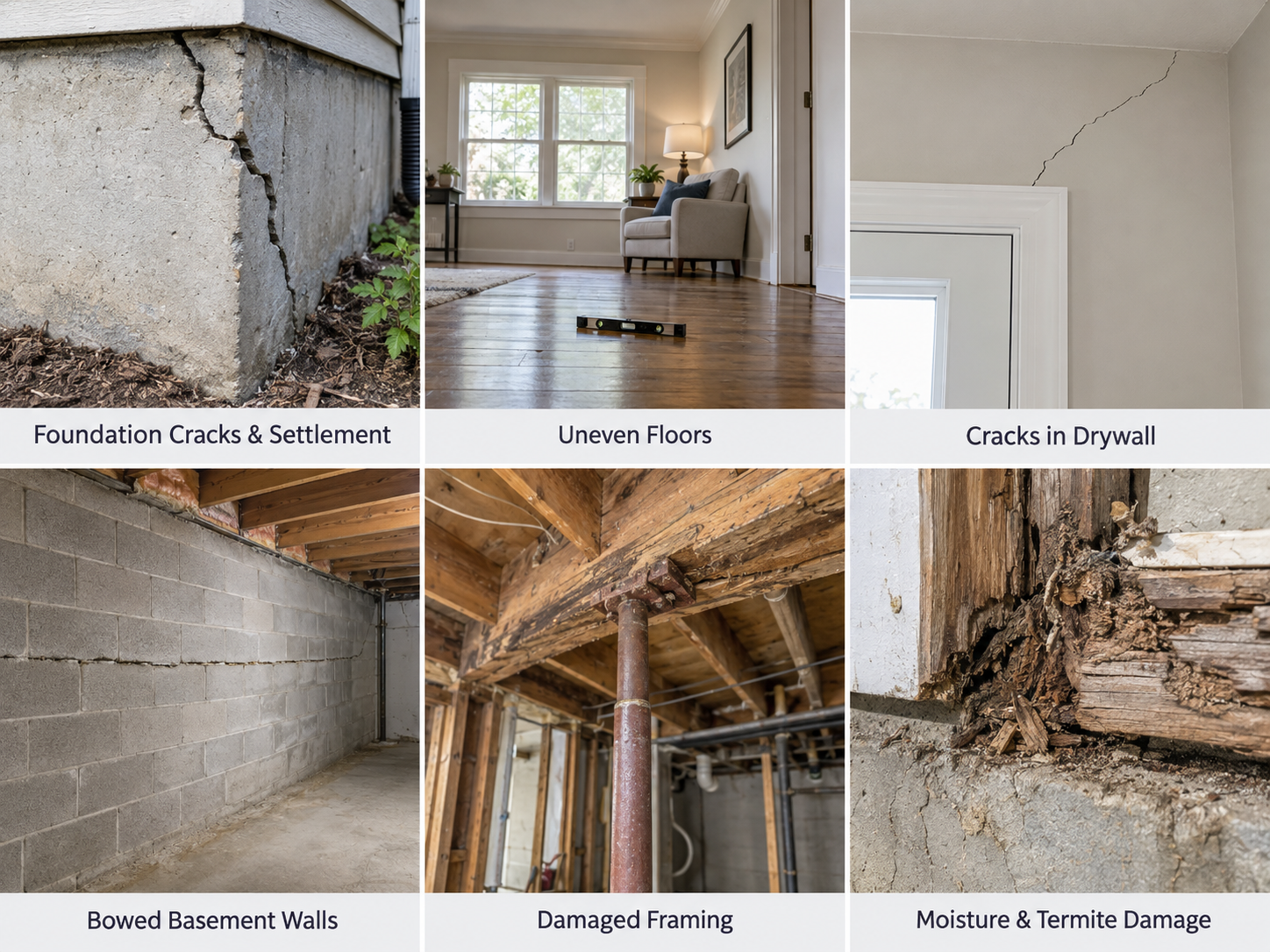
Foundation Cracks & Settlement
Cracking in concrete, masonry, or foundation walls can result from shrinkage, settlement, lateral soil pressure, moisture conditions, or other movement. An engineering evaluation considers the crack pattern, displacement, surrounding distress, foundation configuration, and other visible conditions to determine whether the concern appears cosmetic or structurally significant.
Sagging or Uneven Floors
Sloping, sagging, or uneven floors can result from long-term settlement, undersized framing, damaged joists or beams, column movement, previous renovations, or deterioration. Older buildings often have some degree of floor variation, so the important question is whether the observed condition reflects normal aging or an underlying structural deficiency.
Bowed or Cracked Basement Walls
Foundation walls may develop cracking, bowing, or displacement from lateral soil pressure, drainage conditions, construction deficiencies, or long-term movement. The amount and pattern of movement, wall construction, exterior grade, drainage, and supporting conditions should be considered before determining whether monitoring or reinforcement is appropriate.
Damaged Beams, Joists & Framing
Wood framing can be compromised by excessive loading, notching or drilling, poor alterations, moisture, termites, splitting, or inadequate original construction. Structural evaluation can determine whether the member should remain in service, be reinforced, or require repair design.
Moisture & Termite Deterioration
Water intrusion and wood-destroying insects can reduce the effective section and capacity of structural framing. The visible damage should be evaluated together with the framing configuration, load path, remaining sound material, and extent of deterioration before developing repair recommendations.
Roof & Attic Framing Problems
Split or damaged rafters, sagging roof framing, altered trusses, missing supports, and improper renovations can affect the performance of the roof system. Structural evaluation can identify damaged or modified members and determine whether reinforcement or additional support is warranted.
Retaining Wall Movement
Retaining walls may experience leaning, cracking, rotation, settlement, or localized failure when drainage, soil pressure, foundation support, or wall construction is inadequate. Evaluation should consider both the visible wall condition and the site conditions contributing to the loading.
Structural Modifications & Questionable Renovation
Removed walls, cut joists, altered beams, temporary columns, improperly supported openings, and undocumented renovations can interrupt the intended structural load path. An engineer can evaluate existing alterations and determine whether additional framing, reinforcement, or design documentation is required.
Commercial & Industrial Structural Concerns
Commercial and industrial structures may exhibit deterioration, corrosion, concrete spalling, cracking, framing modifications, equipment-related loading, localized damage, or other changes affecting existing structural systems. Central NJSE provides targeted evaluations to determine the significance of observed conditions and whether additional analysis, repair design, or reinforcement is warranted.
Concrete & Masonry Deterioration • Steel Corrosion • Equipment Support • Building Modifications